Tea 101·
Sheng vs shu pu’erh, without the mystique
Two ways to ferment the same leaf, and why they taste nothing alike.
By Ryan Brown, Founder
Two ways to ferment the same leaf, and why they taste nothing alike.
By Ryan Brown, Founder
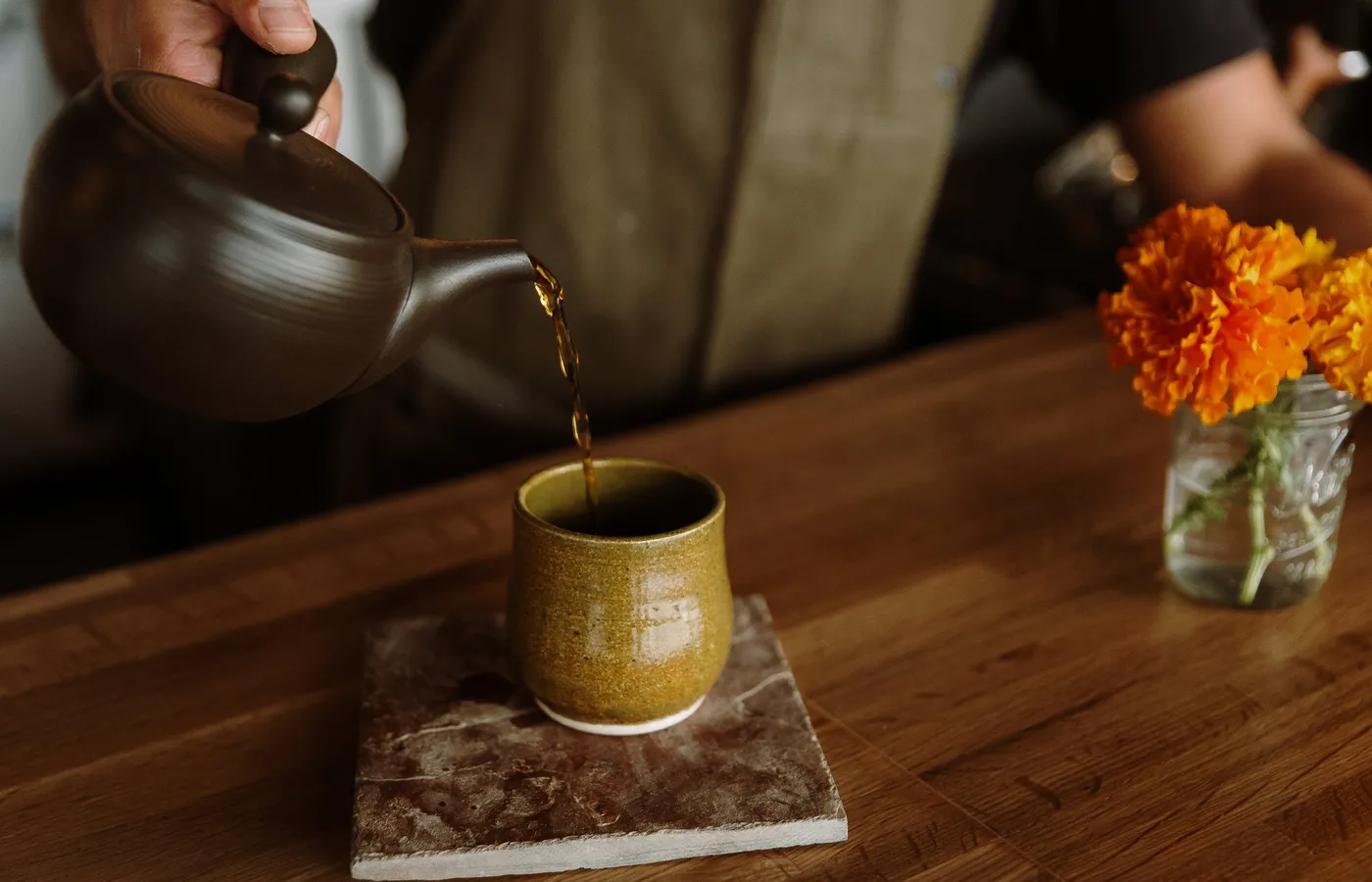
Photo: Lost Cultures (Oct 2023 shoot)
Pu’erh comes from Yunnan, and the two styles you will see on a tea list are sheng and shu. Both start as maocha (sun-dried green tea) and then diverge.
Sheng, or raw, is pressed and left alone. It ages slowly, and young sheng can be bitter, floral and a little aggressive. Give it ten years and it turns into something closer to dried fruit and old books. The 12 Cent Brick and Da Xue Shan on our list are young sheng; 2018 Teadontlie is a few years further along.
Shu, or ripe, is artificially fermented with heat and moisture, a process developed in the 1970s to imitate aged sheng quickly. The result is dark, earthy and sweet: wet soil, cocoa, molasses. Iron Forge and Predawn Dark are shu. People either find that comforting or cannot get past the forest floor.
Neither is better. If you have only had one and decided you do not like pu’erh, order the other style before you write it off.
The 2018 Sun Fu is technically a dark tea rather than a pu’erh, and sits on the list between the two.
2018 Sun Fu
Fresh bread, wild rice & mushroom with subtle notes of bruised apple, tartness, & dried fruit
Iron Forge
Deep & earthy with strong woodsy, wet forest floor & mineral notes, evolving from smoky & slightly sweet in early infusions to sweet wet stones & damp earth
12 Cent Brick
普洱茶砖
Sweet woodiness with hints of florals. Mild resin & smokiness. Sugar, apricot, plum
Visit
1761 Bellamah Ave NW, Suite C, Albuquerque, NM 87104. Open Wednesday to Sunday. Walk-ins welcome; call ahead for six or more.